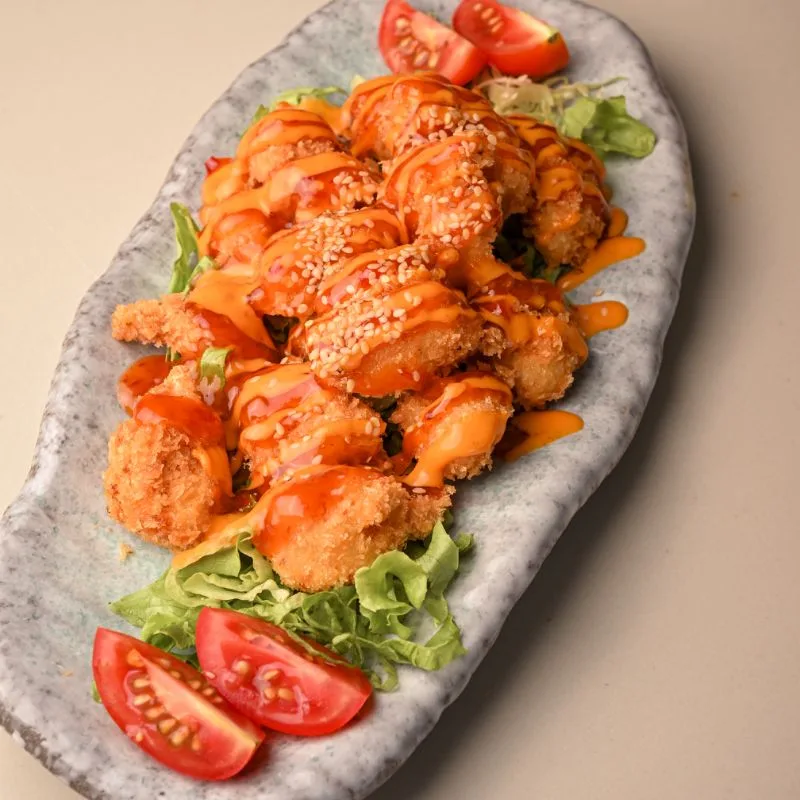
Sweet & Spicy Chicken
甘辛 · amakara
- Fried chicken pieces
- Iceberg lettuce
- Cherry tomatoes
- Sweet and spicy sauce
- Sriracha mayo
Japanese has a single word for this: amakara 甘辛. Ama 甘 is sweet, kara 辛 is hot; they are written side by side and read in one breath. When a language fits two opposite tastes into one word, it tells you how that cuisine thinks about balance. The Western palate long kept sweet and hot in separate worlds; East Asia has been simmering them in the same pot for centuries.
There is sturdy kitchen logic behind the pairing. Sugar caramelizes under heat and builds depth; the warmth of chili rises over that depth; the salt and umami of soy sauce anchor them both. Korean cooking says it with fermented chili, Chinese cooking with caramelized soy, Japanese cooking with a glossy tare. The sentence is the same; the accent changes.
In our reading, the chicken first fries inside a thin crust, then takes a coat of slow-cooked sweet-and-hot sauce. The first touch is soft as honey; the warmth climbs quietly from behind and stays a while on the palate.
A plate where opposites do not quarrel but complete each other. That is what the word amakara looks like on a table.