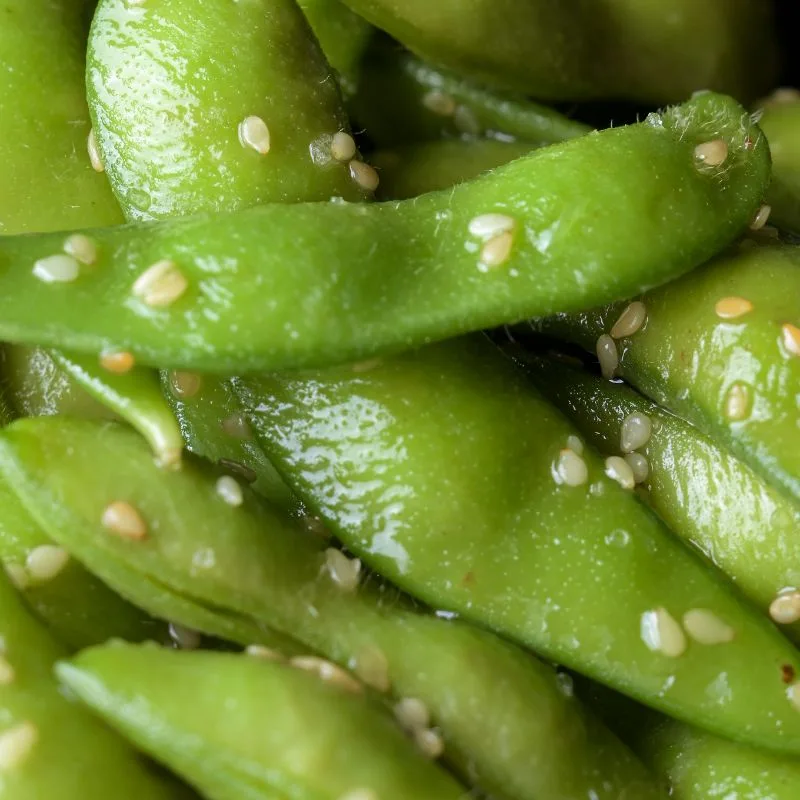
Sea Salt Edamame
枝豆 · edamame
- Sesame oil
- Sesame
- Salt
The first document in history known to contain the word edamame is a thank-you note. In the summer of 1275, the Buddhist monk Nichiren wrote a short letter to a follower who had left fresh soybeans at his temple, and in that letter the green pods are named. Which means that seven hundred and fifty years ago, people were already giving each other edamame.
The word is built from two parts: eda 枝, branch, and mame 豆, bean. Branch beans. In old Japan the pods were sold still on their stems, tied in bundles, and people plucked them off as they walked. The soybean itself is far older; it was domesticated in China some seven thousand years ago and crossed to Japan around the sixth century, by way of Korea. Edamame is the youngest, greenest moment of that ancient plant: the pod picked before ripeness, while the sweetness is still inside.
The preparation is nearly as plain as a rule. The pods steam or boil briefly in salted water, leave the heat before their bright green fades, and take a scattering of coarse sea salt. At izakaya tables the shells pile up as the conversation lengthens, and everyone’s fingers turn salty.
Modest enough to enter a monk’s letter, durable enough to outlast seven centuries. Beginning the table with such a guest feels right to us.