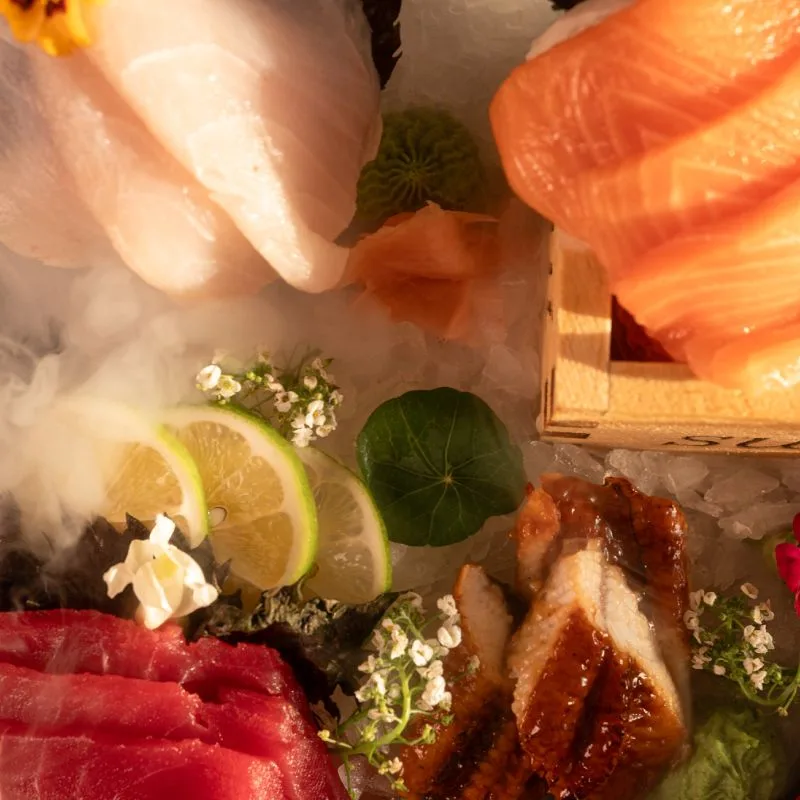
Sashimi Mix
刺身 · sashimi
- Salmon
- Eel
- Tuna balığı
- Sea bass
Translated bluntly, sashimi 刺身 means pierced flesh. One story told about the name goes like this: old fishermen and cooks would pin the fin of the fish beside its slices, so there could be no doubt about what was being served. The dish itself reaches back to the Muromachi period, at least five hundred years; it was the spread of soy sauce that turned this barest form of raw fish into a culinary art.
What defines sashimi is the knife. The yanagiba 柳刃, the willow-leaf blade, is a long single-beveled length of carbon steel with exactly one job: to pass through the fish in a single unbroken pull. A sawing motion crushes the cells and muddies the taste; one clean draw leaves the surface of the slice like a mirror. The difference is not poetic license; the tongue can find it.
This is why, in Japan, sashimi is held to be the true measure of a chef. No rice, no sauce, no heat; nothing to cover a flaw.
Our selection of ten is built from that day’s counter, and its order is deliberate: pale to dark, delicate to rich. The palate climbs the steps one at a time.