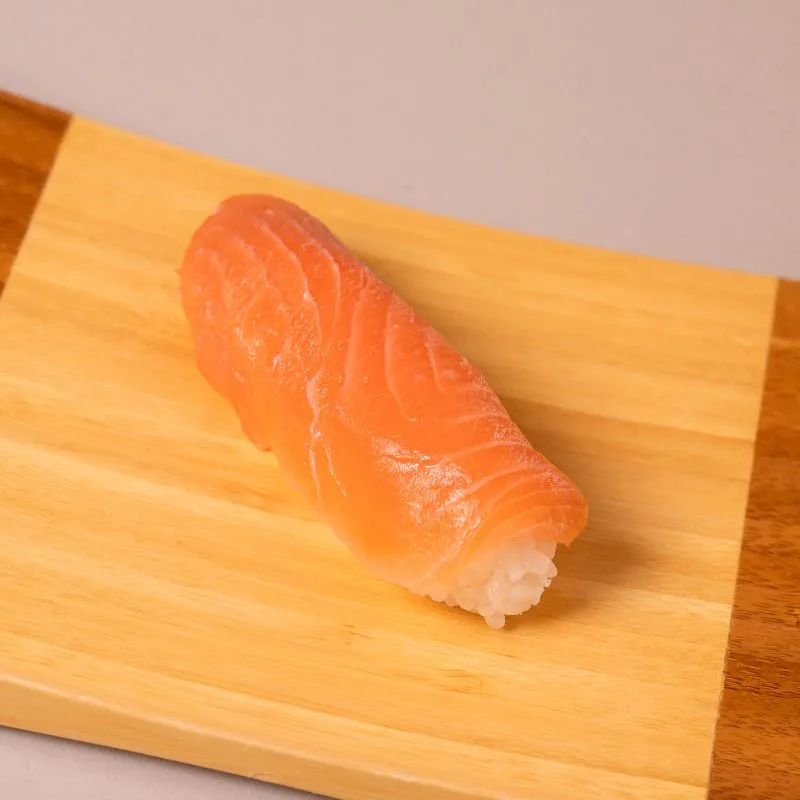
Sake Nigiri
鮭握り · sake nigiri
- Salmon
In the Ryōgoku quarter of Edo in the 1820s, a counter master named Hanaya Yohei 華屋与兵衛 made the greatest invention in sushi history. Until then, sushi had been slow food; fish fermented inside rice for months before it was served. Yohei abolished the waiting: he laid a slice of fresh fish over a pinch of vinegared rice and served it on the spot. Nigiri 握り means pressed in the palm; one of the world’s most refined bites was born as the street food of a city in a hurry.
The people of Edo ate it at stalls by the bridgeheads, standing, with their hands. The ancestor of today’s white-tablecloth sushi rooms is a street cart.
The measure of nigiri has not changed in two centuries: the rice must be loose enough to fall apart against the teeth, firm enough not to fall apart in the fingers. Masters call this letting the rice breathe.
The salmon on top is the invention’s youngest partner; it arrived at the counter through Norway’s persuasion in the 1980s. A generation’s worth of silk resting on a two-hundred-year-old hand: this is how an old craft receives a new guest.