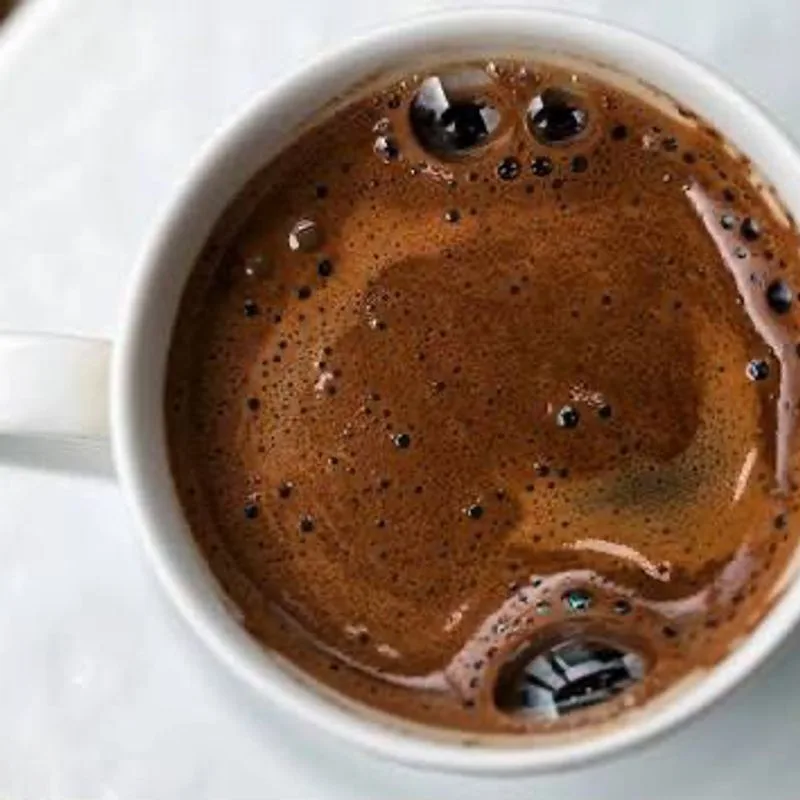
Turkish Coffee
قهوه · kahve
In 1554, in Istanbul’s Tahtakale quarter, two merchants, Hakem of Aleppo and Şems of Damascus, each opened a coffeehouse. Those two shops, preserved in the records, are among the first coffeehouses in the world. Within fifteen years, Istanbul is said to have held six hundred of them. Poetry was read there, chess was played there, the state was criticized there; so much so that the authorities now and then shut down these places of too much talk. Within its first century, coffee had ceased to be merely a drink and become a social institution.
The technique is unlike any other: the coffee is never filtered, it lives with its grounds. Beans milled to the fineness of flour meet cold water in the cezve and rise slowly over a low flame. Whoever hurries loses the foam, and a cup without foam does not count as hospitality. In December 2013, UNESCO inscribed Turkish coffee culture on its list of the Intangible Cultural Heritage of Humanity.
And what is it doing in a sushi restaurant? This: Japan turned tea into a way, and we turned coffee into a memory. We say that a single cup of coffee is remembered for forty years. Both spring from the same conviction: hosting a guest is a craft.
The table may be Japanese; the memory is from here.